
 EN
EN

Robotics Sealing Solutions - High-Performance Seals for Industrial Robotics & Automation
Overview
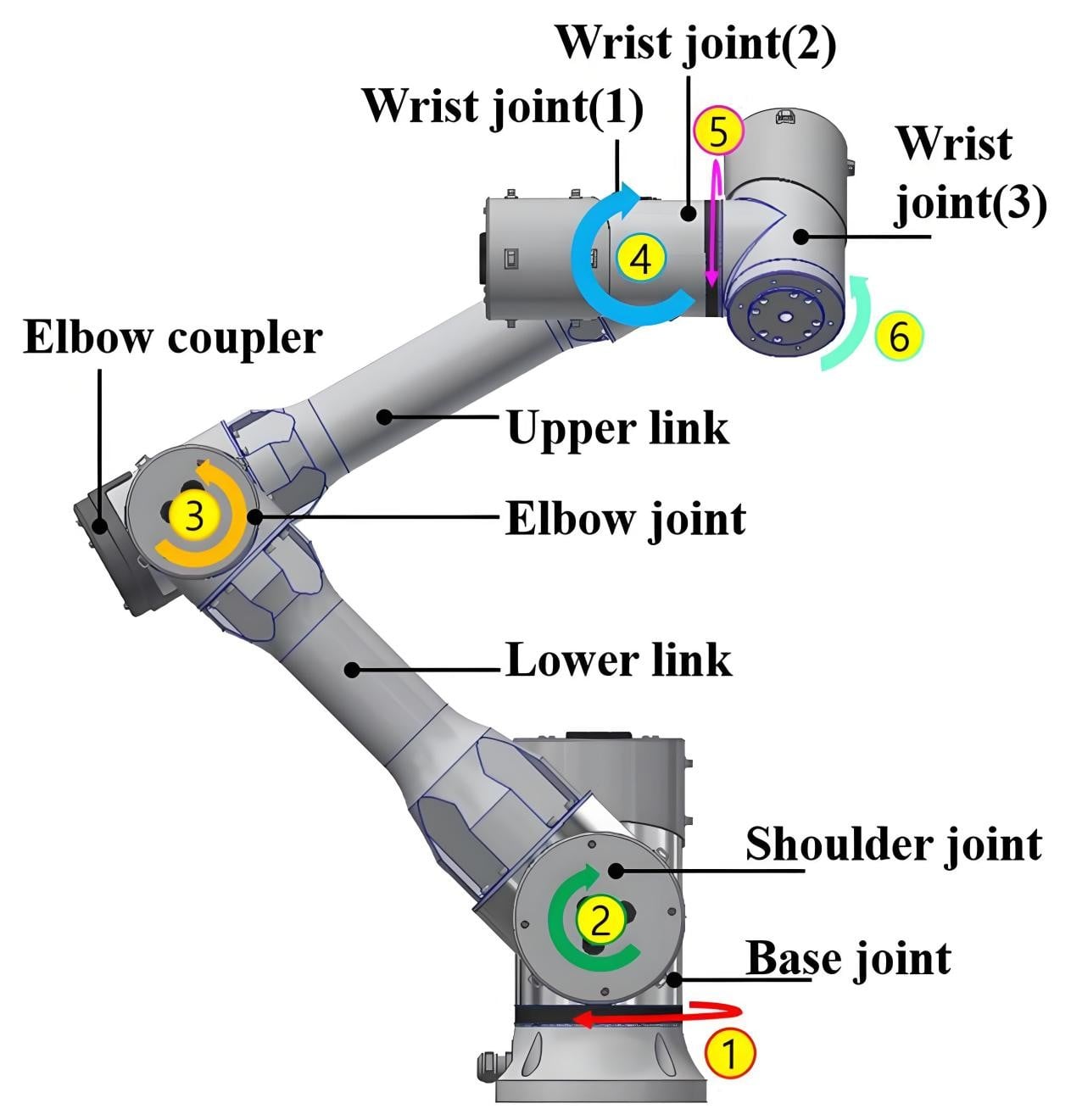 |
Robotic and automation systems require high precision, repeatability, and continuous operation across industries such as manufacturing, electronics, medical devices, and semiconductors. Sealing components play a key role in ensuring motion stability and long-term reliability. |
Unlike conventional machinery, robotics prioritizes low friction and smooth motion. Even slight increases in sealing resistance can reduce positioning accuracy and system efficiency. Seals must therefore balance effective sealing with minimal friction and wear.
These systems often operate at high cycle rates, with frequent start-stop motion and strict cleanliness requirements. Failure of sealing components can lead to reduced accuracy, contamination, increased wear, and downtime.
Tesel Seal develops precision sealing solutions designed for low friction, high durability, and stable performance in robotic applications.
Operating Conditions and Engineering Parameters
Dynamic High-Cycle Operation
Robotic systems operate continuously with millions of motion cycles over their service life. Seals must withstand long-term wear and repeated mechanical stress.
Low Contact Pressure Requirements
Compared to hydraulic systems, robotic seals typically operate under lower contact pressure, requiring careful balance between sealing effectiveness and low friction.
Thermal Influence
Localized heat from motors and friction can affect material properties. Seals must maintain stability under fluctuating thermal conditions.
Lubrication Conditions
Many robotic systems operate with minimal or no lubrication, requiring seals to perform reliably under dry or semi-dry conditions.
Compact Design Constraints
Space limitations require compact, precision-engineered sealing solutions that maintain performance in miniaturized assemblies.
Key Challenges in Robotics Sealing
Friction Control and Motion Stability
Excessive friction can reduce motion efficiency and cause stick-slip behavior, affecting positioning accuracy and smooth operation.
High-Cycle Wear Resistance
Continuous operation leads to significant wear over time. Seals must maintain performance across millions of cycles.
Contamination Control
Clean environments require seals to prevent particle ingress and minimize internal wear debris generation.
Space Limitations
Compact robotic designs require small, highly precise sealing components without performance loss.
Thermal Stability
Heat generated during operation can impact material performance. Seals must remain stable under localized temperature variation.
Key Features and Performance Advantages
Sealing Technologies
Material Selection Strategy
Material selection plays a critical role in robotic sealing performance.
|
Material |
Key Benefits |
Application |
|
PTFE |
Low friction, chemical stability |
Precision motion |
|
PEEK |
High strength, wear resistance |
Structural components |
|
TPU |
Flexibility and durability |
Dynamic sealing |
|
FKM |
Temperature and chemical resistance |
General use |
Selecting the correct material ensures optimal performance and longevity.
Applications
Industrial Robotics |
Used in robotic arms and automation systems where precision and repeatability are critical. |
Collaborative Robots (Cobots) |
Require smooth motion and safe operation in human-machine interaction environments. |
Semiconductor Automation |
Requires ultra-clean sealing solutions with low particle generation. |
Medical Robotics |
Demands high precision, reliability, and compliance with strict standards. |
Failure Analysis
Common failure modes in robotic sealing systems include:
- Friction-induced instability affecting motion accuracy
- Wear leading to reduced sealing performance
- Particle generation causing contamination
- Thermal degradation affecting material properties
Understanding these failure mechanisms helps improve sealing design and performance.
Performance Optimization
Optimizing sealing performance involves selecting appropriate materials, refining seal geometry, and analyzing system motion.
Reducing friction, improving wear resistance, and minimizing contamination are key objectives.
Buyer Guide
Selecting the correct sealing solution requires evaluating:
- Motion type and speed
- Precision requirements
- Environmental conditions
- Space constraints
- Expected service life
Working with experienced engineers ensures optimal results.
Why Choose Our Robotics Sealing Solutions
We combine material expertise, precision engineering, and application knowledge to deliver high-performance sealing solutions.
Our strengths include:
- Deep understanding of robotic system requirements
- Custom-engineered sealing solutions
- Consistent product quality
- Reliable performance under dynamic conditions
- Engineering support throughout the project lifecycle
Custom Engineering Capabilities
Every robotic application has unique requirements. We work closely with customers to develop optimized sealing solutions.
Our capabilities include:
- Motion analysis and friction optimization
- Material selection for performance and durability
- Custom seal geometry design
- Rapid prototyping and validation
Our goal is to help you achieve maximum performance, precision, and reliability.
FAQ
Why is low friction important in robotics?
Low friction ensures smooth motion, reduces wear, and improves positioning accuracy.
Which materials are best for robotic sealing applications?
PTFE and PEEK are commonly used due to their low friction and high stability.
Can sealing solutions affect robotic precision?
Yes. Sealing performance directly impacts friction, wear, and motion consistency.
Do you provide custom sealing solutions?
Yes. Robotics applications often require tailored sealing designs based on specific requirements.
Call to Action
Improve Precision. Reduce Wear. Maximize System Performance.Your robotic systems depend on reliable sealing performance.
Response within 24 hours.
|
 |